


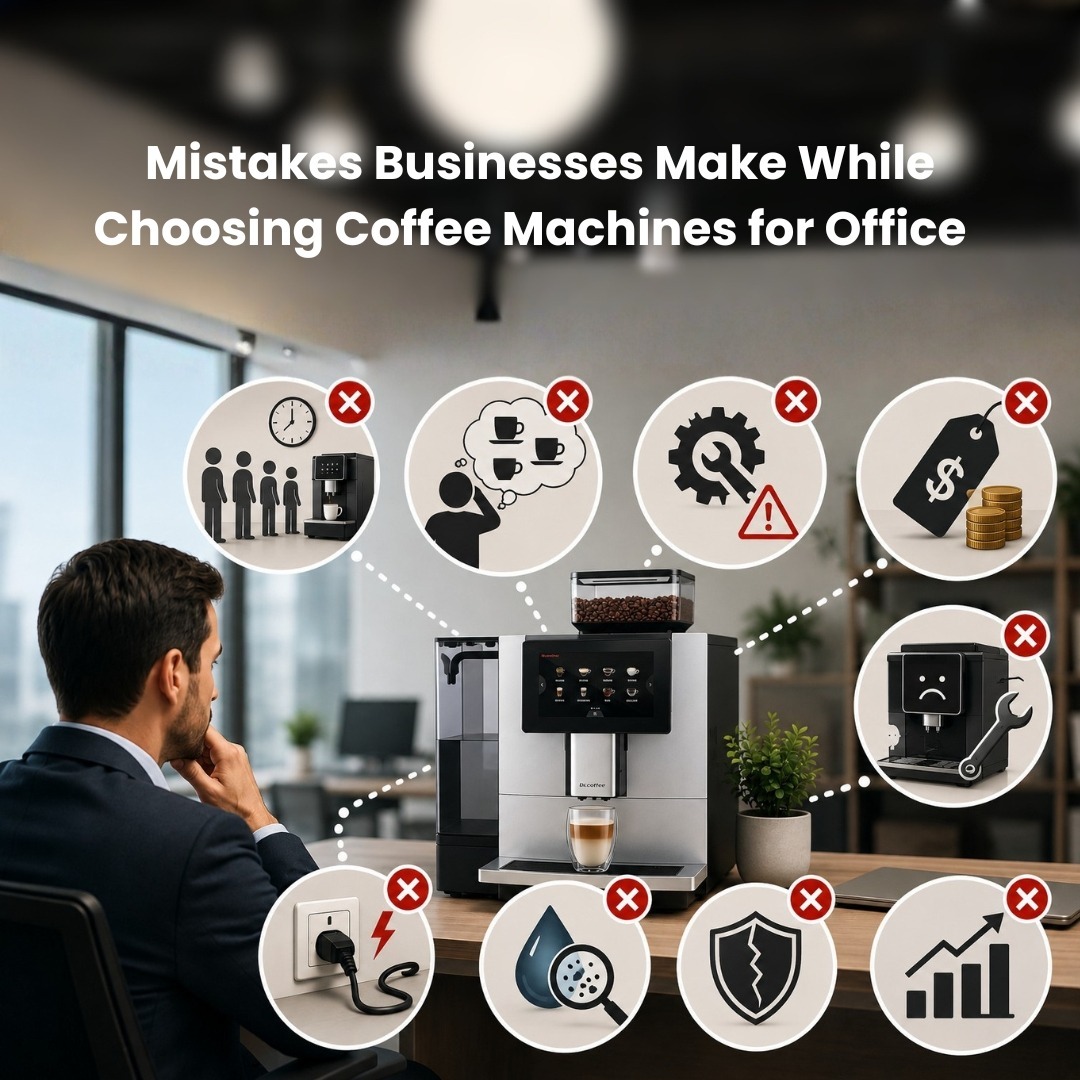
Choosing the right coffee machine for your workplace takes more thought than you might expect. Many business owners miss important factors that affect how your team works, how happy employees are, and what you spend over time. A good choice improves productivity. A bad one causes headaches and wastes money.
Ignoring Your Actual Volume Needs
Most businesses underestimate how much coffee their team drinks. You feel good about your choice on Monday. By Wednesday, people are standing in line waiting.
Understanding Daily Consumption Patterns
Start by counting your employees and their coffee habits.
- Do 80% of staff drink coffee every day?
- When do people drink the most coffee (normally 8-10 AM)?
- Do visitors and clients also drink coffee?
Your coffee machine needs to handle peak times without making people wait. A machine that makes 40 cups per hour falls behind when 50 people want coffee at the same time.
Calculating True Capacity Requirements
Think about shift patterns and seasonal changes. Night shift workers need different equipment than standard office hours. More staff arrive during holiday seasons.
A machine that runs all day without breaks wears out faster and makes bad quality coffee. Your team gets frustrated waiting for brewing to finish. Real capacity means the machine handles your busiest times while making good drinks and having time for cleaning.
Overlooking Maintenance and Support Requirements
New machines look great. What happens six months later when something breaks or needs fixing?
Finding Reliable Service Coverage
Check if the company offers good service before you buy.
- Do they have local people who fix machines?
- How fast do they come when there’s a problem?
- Can you get replacement parts easily?
- Do they offer regular maintenance checks?
A broken machine sitting for two weeks costs you far more than the equipment price. Your staff goes back to instant coffee or buys drinks outside. People get annoyed.
Planning Maintenance Budgets
Add service costs to what you’ll spend overall. Some machines need cleaning every three months. Others need filter changes every month. Good ones tell you when they need attention, yet someone still has to do the work.
Good service relationships make the difference between a smart buy and money wasted. Ask people who use the machines what they think about service. Read reviews about how fast the company fixes problems.
Energy Efficiency Matters More Than You Think
Commercial machines run multiple times every day. Electricity bills add up quickly over a year. Machines that use less power cost less to run. They also help the environment, which your staff and clients care about.
Forgetting About Space and Installation
Your new machine arrives. It doesn’t fit your counter. The water hookup is in the wrong spot. Installation wasn’t included in the price.
Measuring Before You Buy
Get accurate measurements of your counter space. Make sure there is room on all sides for cleaning and repairs. Check the ceiling height for tall machines. Look at where water and electrical outlets are located.
Visit showrooms to see machines in person. Space looks different in pictures. Width, height, and depth matter for how your team works and gets equipment serviced.
Understanding Installation Complexity
Some machines need professional plumbing work. Others need special electrical outlets. These costs don’t show up in the product price but appear in your installation bill.
Add installation, setup, and staff training to your timeline. A machine arriving Friday doesn’t mean everyone uses it Monday.
Ignoring Water Quality Issues
Your local water changes how your coffee tastes. Hard water leaves mineral buildup. Chlorinated water affects flavor. Bad water creates health issues.
Testing Your Water Supply
Have your water checked before you buy equipment.
- Hard water means you clean it more often
- pH levels affect how well coffee brews and tastes
- Minerals in water affect how long the machine lasts
Adding water filters costs more upfront yet protects your machine. Filtered water helps the machine last longer and makes better coffee. Your team notices the difference.
Conclusion
Choosing a coffee machine means looking past the upfront cost. Figure out how much coffee your team really drinks. Look into service options and how reliable they are. Add up all costs over three to five years. Measure your space and plan installation properly. Check your water quality. Train your staff well.
This takes work but protects what you spend. The right machine makes your workplace better and runs well for years. Bad choices cause headaches and disappointed employees every single day. Your coffee machine gets used multiple times daily. That makes this choice important for your business and how your team feels at work.
FAQs
How often should commercial coffee machines be serviced?
Most coffee machines need a professional check every three months. Your staff should clean it every day. Monthly deep cleaning stops mineral buildup. Your supplier tells you exactly what to do. Skipping maintenance kills machines fast and breaks warranty coverage.
Is water filtration really necessary?
Yes. In many areas, hard water destroys machines in 18 months. Water filtration can add 5–10 years to your machine’s life. The money you save on repairs pays for the maintenance. You get better-tasting coffee as a bonus.
Can I install a coffee machine myself?
Hire a professional. Water connection mistakes cause leaks and damage. Electrical problems create safety risks. Professional installation ensures proper setup, safety compliance, and optimal machine coffee performance.
