


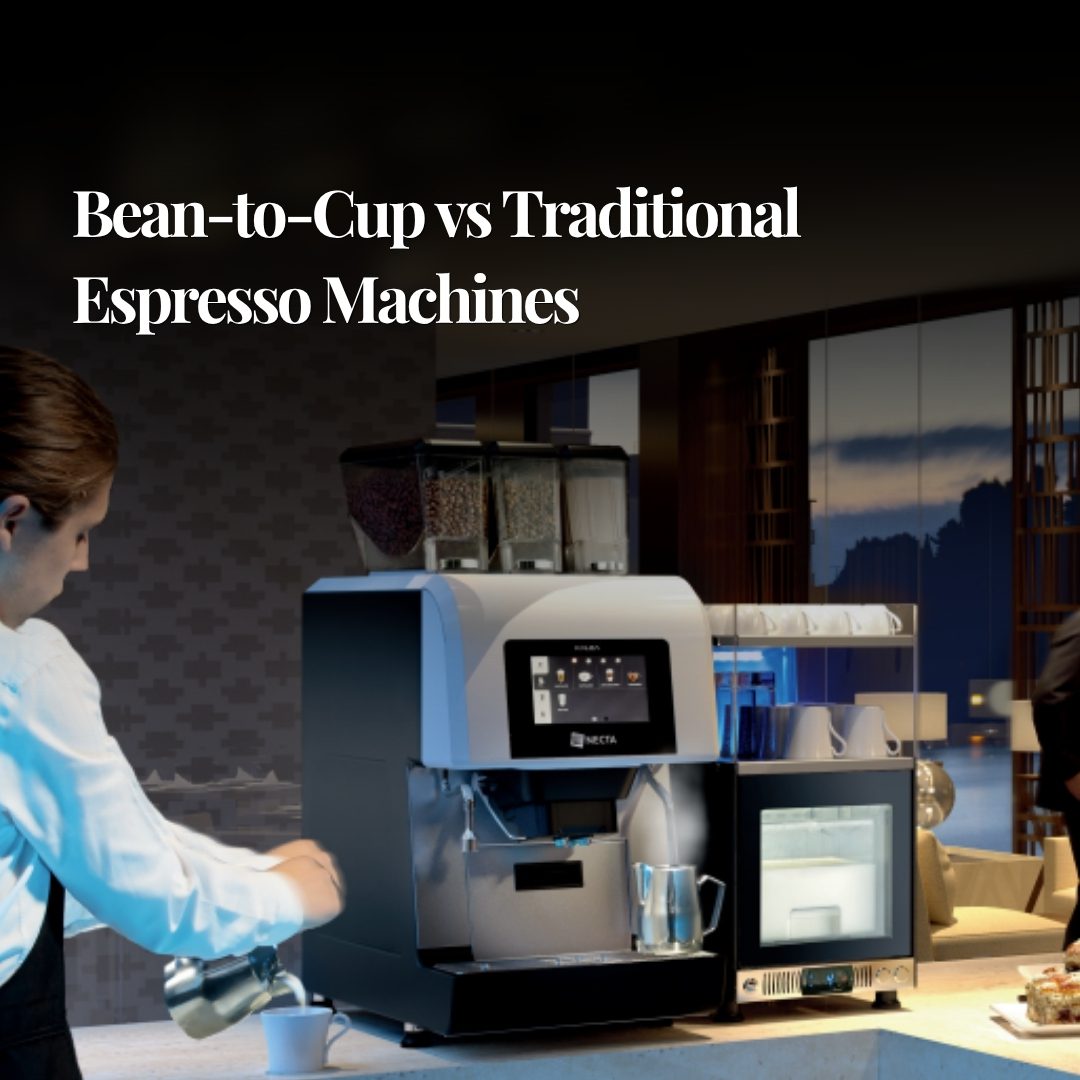
Are you confused between a bean-to-cup setup and a traditional espresso machine? If the choice of the right machine determines your coffee ritual, you are at the right place.
On one hand, the Bean-to-cup models work by automating everything. You add beans into the hopper, press a button, and the machine grinds, doses, brews, and sometimes steams milk. Traditional espresso machines separate the steps. You grind beans separately, dose and tamp the portafilter by hand, and steam milk with a wand. The difference comes down to convenience versus involvement.
The Morning Coffee Struggle
Many people face a familiar morning problem. You buy fresh, well-roasted beans but your espresso still tastes off. It can be sour, bitter, or thin. Buying an expensive commercial-style machine feels like the solution, but learning to dial in grind size and tamping pressure takes time. On hectic mornings most of us do not have that time. That leads to either daily visits to a café or settling for instant alternatives. The real question is whether you want a fast routine or a hands-on ritual that rewards practice.
Understanding Bean-to-Cup Automatics
Bean-to-cup systems house a built-in grinder, tamping mechanism, and brewing unit inside a single appliance. All you must do is add the fresh beans into the hopper and allow the machine to handle the rest.
- The espresso is ready in under sixty seconds
- The automatic machine ensures consistency in dosing and water volume
- The automatic rinsing cycles ensures minimal maintenance
These machines suit busy offices and households prioritizing speed. The integrated grinders work well with medium roasts, though very oily dark roasts can clog the internal chutes over time.
Analyzing Traditional Espresso Machines
Traditional machines separate the grinding and brewing stages. You need a standalone burr grinder to feed a portafilter, which you then tamp manually.
- You can extract subtle flavor from the beans by adjusting the grind size
- The manual steam wands help to create the best foam for latte art
- Fewer digital components add to the longevity of the setup
This path requires an upfront investment in a quality grinder. It demands patience to learn how weather and bean age affect your extraction times.
Key Differences for Buyers
Skill Requirements and Upkeep
Automated units require zero training. When using the traditional setup, you must remember that it demands a bit of learning curve. It helps to avoid channeling. This is the instance that causes the water to rush through the coffee unevenly.
Cleaning traditional portafilters takes seconds, whereas automatic brewing blocks require regular chemical tablets to dissolve hidden oil buildup.
Financial Investment
Bean-to-cup machines carry a higher initial cost for the automation. Traditional setups let you split your budget between the machine and the grinder, which often yields better long-term value.
Final Decision Guidelines
Your choice depends on your lifestyle priorities. If you want fresh espresso with zero friction, choose a bean-to-cup system. If you view coffee making as an enjoyable hobby and want to master milk texturing, a traditional machine is your best option.https://kaapisolutions.com/commercial-bean-to-cup-coffee-machine/
