


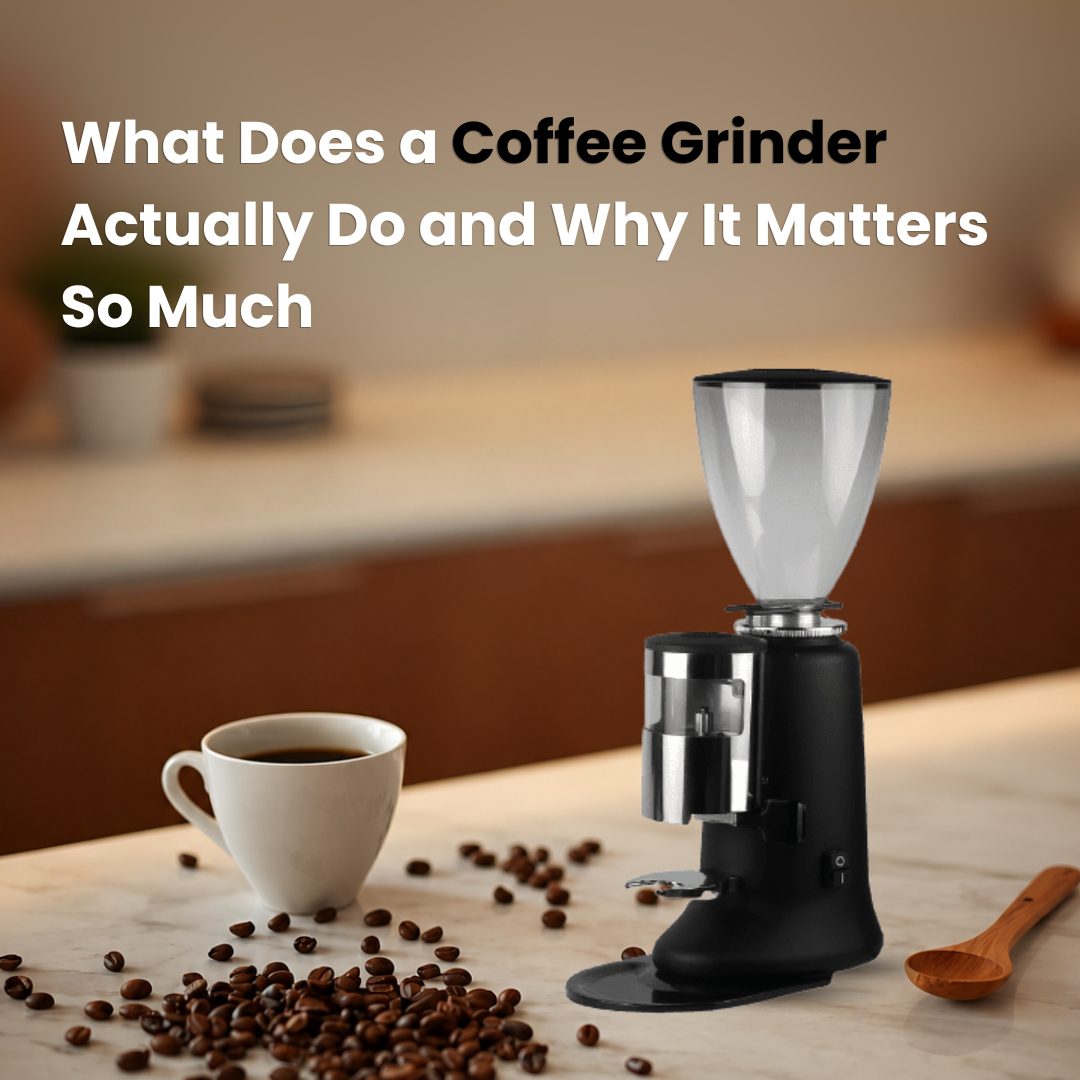
Coffee grinders are among the most essential components in a brewing setup. But it is also often the most overlooked equipment. The flavor potential of the coffee beans does not come from the machine that brews it, but it is determined by the consistency of the ground beans. Investing in a quality coffee grinder ensures to convert whole beans into fine particles of the right size. It maintains uniformity for the brewing method in use. This is how you can ensure to get the perfect and desired flavor.
The Mechanics of Grinding Beans
Whole coffee beans trap flavors inside their structure. Hot water cannot reach these compounds easily. You must break the bean apart to expose the inner layers. This physical breakdown dictates the final taste of your morning brew.
Surface Area and Extraction
Water needs maximum surface area to pull flavors from the coffee. Finer particles expose more of the inner bean. Coarser particles keep those compounds hidden. This physical process dictates the speed of flavor transfer. The water acts as a solvent. It washes over the grounds and dissolves the solubles. You control this exact reaction with your equipment.
- Finer grounds let water extract flavors fast.
- Coarser grounds demand extended brewing time.
- Consistent particle distribution stops bitter flavors from dominating the cup.
Burr or Blade Systems
People frequently buy cheap blade machines for their kitchens. These machines chop beans randomly into dust and large chunks. We prefer burr systems (the professional choice) for a very specific reason. They crush beans uniformly every single time.
Consistency in Particle Size
A burr system uses two heavy abrasive surfaces. You set the exact physical distance separating them. The beans fall through this gap. This mechanism dictates the final size of every single particle. The water hits these uniform pieces evenly. The brew tastes balanced and sweet. Cheap choppers ruin this balance completely.
- Uniform particles extract at the exact same speed.
- Cheap blades create bitter dust alongside sour boulders.
- Flat burrs offer totally different flavor profiles than conical burrs.
Matching Grind to Brewing Method
Every brewing device requires a specific particle size to function properly. Espresso machines need fine powder to create resistance. A French press uses a metal filter requiring coarse chunks. You must align the grinder with your chosen method.
Finding the Right Setting
Your machine acts as a strict control mechanism. You adjust the grind size daily to match your coffee choice. We constantly tweak our settings based on the age of the beans. The room temperature plays a big part too. You turn the dial finer if the water flows too fast or turn it coarser if the brew tastes harsh.
Overcoming Resistance During Brewing
Water always follows the path of least physical resistance. Coffee grounds pack together tightly to form a solid physical barrier. The grinder decides how restrictive this barrier becomes. A very tight barrier slows the water flow dramatically.
Managing Water Flow Dynamics
Espresso requires intense pressure to push water through the packed coffee basket. The grounds must fight back against this pressure. You adjust your grinder to create the perfect amount of pushback. Too much resistance chokes the espresso machine entirely. Too little resistance creates a watery mess in your cup. We monitor this flow rate every single morning.
The coffee grinder sits at the heart of your home setup. It dictates the entire flavor profile of your drink. Choosing the right grinder allows you to treat your beans with the respect they deserve. You now have the knowledge to move past pre-ground bags. Start dialing in your perfect cup today. Your morning routine will transform once you gain control over these physical variables.
Frequently Asked Questions
Why do burr grinders cost more than blade models?
Burr models use heavy metal or ceramic grinding plates. These mechanical parts require precision manufacturing for perfect alignment. Blade models use cheap motors and thin metal spinners. The price difference reflects the heavy materials and the complex engineering inside the unit.
Can I use the same setting for espresso and French press?
No. Espresso demands a fine powder to create pressure resistance. A French press relies on steeping in water (very similar to making tea). You need large coarse pieces for a French press to stop the coffee grounds from passing through the metal mesh filter.
How often should one clean the burrs?
We recommend a thorough deep cleaning at least once a month. Dark roasted beans leave heavy oil residue on the metal teeth. This old sticky oil turns rancid over time. You ruin the taste of fresh expensive beans if they pass through a dirty machine. Regular brushing keeps the flavor incredibly pure.
