


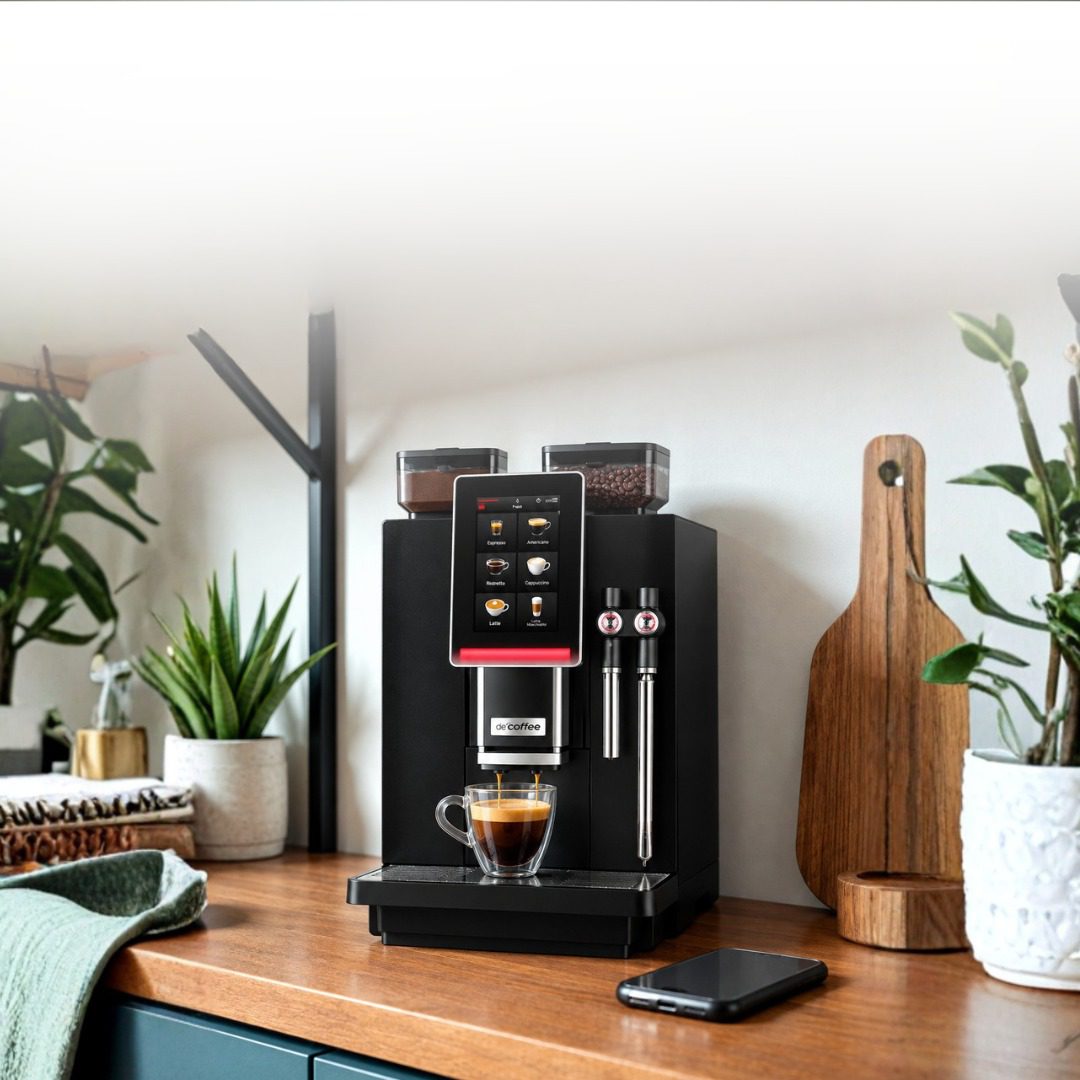
Walk into almost any office in India between 11 am and noon and you will find the same thing happening near the pantry. Someone is waiting for the kettle. Someone else has given up and ordered from the cafe downstairs. A third person is stirring instant coffee and quietly making peace with it. Coffee has become part of how the workday runs, and the equipment behind it decides whether that moment feels like a small reset or a small irritation.
A proper office coffee maker changes the arithmetic. Instead of three people losing ten minutes each, one machine delivers a fresh cup in under a minute and everyone gets back to their desk. Visitors get something decent in the meeting room. The pantry stops being a bottleneck. It sounds like a minor operational detail until you multiply it across two hundred employees and two hundred and forty working days.
The catch is that most consumer coffee makers are not built for this. A machine designed for four or five cups a morning will start showing wear within months when it is asked to produce a hundred and fifty. Offices need commercial-grade equipment: heavier boilers, stronger pumps, larger bean hoppers and components engineered for continuous daily use. This guide walks through how to pick the right one.
Why Offices Need a Dedicated Coffee Maker Machine
The demands of a workplace are different from a home kitchen in a few specific ways, and each one puts pressure on the machine.
- Frequent preparation: An office machine is switched on at nine and rarely rests until evening. Heating elements and pumps need to handle that cycle without cooling down between cups.
- Multiple users through the day: Fifty different people will press the same buttons. That rules out anything requiring technique or judgement.
- Faster brewing: Tea breaks cluster. If the machine takes three minutes a cup, a queue of six people becomes a twenty-minute wait.
- Consistent quality: The cappuccino at 9 am and the one at 6 pm should taste identical. Consistency is what makes people trust the machine and stop going out for coffee.
- Convenience for employees and visitors: A client waiting in a conference room should be offered a real cappuccino, not sachet coffee.
This is exactly why coffee machines for corporate offices are specified differently from domestic units, right down to the grade of the grinder burrs.
Types of Coffee Makers Suitable for Offices
Four broad categories cover almost every workplace requirement. The right one depends on volume, the drink menu you want to offer and how much staff involvement you are willing to accept.
Automatic Coffee Maker Machines
For most offices, this is the answer. Automatic coffee machines grind, dose, tamp, extract and froth milk on their own. An employee selects a drink, the machine handles the rest, and the cup that comes out is the same every time regardless of who pressed the button.
- Operation is genuinely one-touch, so no training is needed beyond a five-minute walkthrough.
- Results stay consistent because grind size, dose and water temperature are controlled by the machine, not by the person.
- They suit busy workplaces where nobody has the time or inclination to learn latte art.
The Dr Coffee F11 is a good example of the compact end of this category. It is a countertop machine with a ceramic grinder and a dual-mode brewing system, with an advisable daily output of around 120 cups, which covers most small offices, meeting rooms and conference floors comfortably.
Commercial Drip and Bulk Brewing Coffee Makers
Drip brewers work on a different principle. Rather than making one cup at a time, they brew a full batch that stays hot in a thermal server or airport. For an all-day training session, a townhall or a board meeting where thirty people want coffee at the same moment, batch brewing is faster and simpler than any espresso-based machine.
- Large brewing capacity in a single cycle, so nobody queues.
- Well suited to teams, meetings and events with predictable timing.
The limitation is flexibility. A drip brewer produces black coffee, not cappuccinos or lattes, and brewed coffee has a limited holding window before it tastes flat. Most offices use one alongside an automatic machine rather than instead of it.
Bean-to-Cup Coffee Machines
Bean-to-cup machines grind whole beans for every single cup, which is the single biggest factor in how the coffee actually tastes. Ground coffee sitting in a container loses its aroma within days; beans ground seconds before extraction do not. Machines like the Dr Coffee Minibar can put out over 200 cups, offer customisable drinks and include a steam wand for milk foam, while the Necta Kalea comes from an Italian super-automatic range built specifically for offices and the HoReCa segment.
- Freshly ground coffee for every cup, with a noticeable difference in aroma.
- Multiple beverage options from one machine: espresso, americano, cappuccino, latte, black coffee.
- A natural fit for premium office environments, executive floors and client-facing spaces.
Espresso Coffee Machines for Offices
Traditional semi-automatic espresso machines give the most control over the cup, and offices with a real coffee culture or an in-house cafe counter often prefer them. Machines such as the Astoria Tanya or the Astoria Pratic Avant are built for continuous commercial service.
- Full espresso-based menu with barista-level control over extraction and milk texture.
- Best suited to offices with high consumption and someone assigned to operate the machine.
Two things to plan for: a semi-automatic setup needs a matching commercial grinder and it needs a trained operator. If neither is realistic, an automatic machine will serve you better. If you do go this route, barista training is worth budgeting for from day one.
How to Choose the Best Coffee Maker Machine for an Office
Once the category is clear, the specification is a matter of matching the machine to how your office actually behaves.
Consider Office Size and Number of Users
Start with headcount, then be honest about how many of those people drink coffee and how often. A rough working figure is two cups per coffee drinker per day.
- Small offices and startups: a compact countertop automatic machine handles the load without taking over the pantry.
- Medium-sized offices: look at machines with a larger bean hopper and faster recovery, such as the Dr Coffee M10 or the My Espressino JL36A.
- Large corporate workplaces: high-output machines like the Dr Coffee M12 Big or Dr Coffee CoffeeZone, often more than one, placed across floors.
Shared workspaces have their own pattern of unpredictable, all-day demand, which is why coffee machines for coworking spaces are usually specified a size larger than headcount alone would suggest.
Check Brewing Capacity
Capacity is not one number. Three separate figures decide whether a machine copes with your peak hour.
- Cups per cycle or per hour: this tells you how the machine behaves during the 11 am rush, not across the whole day.
- Water tank or plumbed-in supply: a small reservoir means someone refills it constantly. In offices above a certain volume, a direct water connection is the sensible choice.
- Bean and milk storage: a hopper that empties twice a day creates a maintenance job nobody has been assigned.
As a benchmark, the My Espressino JL30 is rated for over 100 cups of coffee daily with automatic grinding, which gives you a sense of what a compact office machine is designed to sustain.
Look for Fast Brewing
Preparation time per cup matters more than most buyers expect. The difference between forty seconds and ninety seconds is invisible on a spec sheet and very visible when eight people are standing in line. Ask about recovery time too, which is how quickly the boiler is ready for the next cup after a milk-based drink.
Prioritise Ease of Operation
The best coffee maker machine for an office is the one that a new joiner can use on day one without asking anyone. Look for clear icons or a simple touch display, one-touch beverage selection and no manual steps between pressing a button and picking up the cup. If a machine needs a briefing, it will be used less than you expect.
Consider Cleaning and Maintenance
Ask two questions during the demo: what has to be done daily, and who is going to do it. Milk systems are where most office machines fail, because milk residue is unforgiving. Automatic milk-circuit rinsing, removable brew groups and easy-to-empty waste bins keep the daily routine to a few minutes. Descaling frequency depends on your water hardness, which is worth testing before installation rather than after.
Evaluate Durability
Commercial-grade construction, stainless steel body panels and components rated for continuous daily use are what separate an office machine from a large domestic one. Equally important is what happens after the sale. Spare parts availability, engineer response time and a preventive maintenance schedule decide whether a breakdown costs you an afternoon or a fortnight, so check the service and support coverage in your city before you finalise anything.
Best Coffee Maker Machine Features for Offices
Not every feature earns its place in every office. These are the ones that consistently prove useful in a workplace setting.
- Multiple coffee options so espresso drinkers and cappuccino drinkers share one machine.
- Programmable settings for cup size, coffee strength and milk quantity, locked once calibrated.
- Temperature control, which keeps extraction stable from the first cup to the last.
- A built-in grinder, ideally ceramic burrs, for fresh grinding on every cup.
- A milk frothing system, either an automatic circuit or a steam wand, depending on your drink menu.
- A large water reservoir or a plumbed connection to cut down on refilling.
- Automatic cleaning and rinsing cycles that reduce the daily task to a couple of minutes.
- Energy-saving or standby mode, which matters on a machine that stays powered for ten hours a day.
- Cup counters or connected monitoring, useful for tracking consumption and planning bean inventory.
Coffee Maker for Small vs Large Offices
The same brand can serve both, but the specification changes considerably.
Parameter | Small Office (up to ~40 people) | Large Office / Corporate Campus |
Daily cup volume | Roughly 60-120 cups a day | 250 cups a day and upwards, often across floors |
Number of users | One pantry, predictable rush at 11 am and 4 pm | Multiple pantries, shift overlaps, continuous demand |
Brewing speed | A short queue is acceptable | Back-to-back cups with no recovery gap are essential |
Features | Compact bean-to-cup with a few core beverages | Larger bean and water capacity, wider drink menu, dual grinders, telemetry |
Maintenance | Daily rinse plus weekly milk-system clean by pantry staff | Scheduled preventive maintenance and water filtration alongside daily cleaning |
Suitable machine type | Countertop automatic machine such as Dr Coffee F11 or My Espressino JL36A | High-output automatic machine such as Dr Coffee M12 Big, Dr Coffee CoffeeZone or Necta Kalea |
These figures are directional. Actual sizing should be based on a proper assessment of your headcount, peak-hour behaviour and beverage mix.
Benefits of Installing Coffee Makers in the Office
- It saves time. Ten minutes a day spent walking to a cafe, multiplied across a team, is a real number.
- It makes the workplace easier to be in, which is a small thing employees notice every single day.
- It supports satisfaction and retention in a low-cost, highly visible way.
- It improves meetings and client visits. Serving a proper cappuccino in a conference room says something about the organisation.
- It reduces dependence on outside cafes, along with the delivery charges and the queue downstairs.
How to Maintain an Office Coffee Maker
Machines rarely fail suddenly. They fail because a routine slipped for a few weeks. Assign the daily tasks to a named person, not to the pantry in general.
- Daily: run the automatic rinse, empty and wash the drip tray and waste bin, wipe the milk lines and the exterior.
- Regularly: descale according to your water hardness and usage. Hard water in most Indian cities means this comes around sooner than the manual assumes.
- Weekly: clean the brewing system with a proper cleaning tablet or detergent, not just water.
- As required: replace water filters and softener cartridges on schedule, because scale damage is expensive and entirely preventable.
- Periodically: book professional servicing for commercial machines. A preventive maintenance visit catches worn seals and pump issues before they turn into downtime.
Common Mistakes When Buying an Office Coffee Maker
- Buying for headcount instead of for peak hour. Sixty people do not want coffee spread evenly across the day; they want it at 11 am.
- Ignoring real daily volume and choosing a machine rated for far less, which shortens its life considerably.
- Deciding purely on purchase price. Running cost, service intervals and downtime add up to far more over five years.
- Overlooking maintenance during the demo, then discovering the milk circuit needs a twenty-minute daily routine.
- Not checking the beverage menu against what the office actually drinks, and ending up with no hot milk option or no black coffee setting.
- Skipping the brand and service check. It is worth looking at which brands are supported with parts and engineers in your city.
Frequently Asked Questions
What is the best coffee maker machine for office use?
For most offices it is a fully automatic bean-to-cup machine, because it delivers consistent quality with one-touch operation and needs no trained operator. The specific model depends on daily cup volume, the drinks you want to offer and available counter space.
Which coffee maker is suitable for a large office?
Large offices need high-output automatic machines with a big bean hopper, a plumbed water connection and fast recovery between cups. Models in the Dr Coffee M12 Big, CoffeeZone and Necta range are built for this level of demand, and many large workplaces install more than one unit across floors.
How many cups can an office coffee maker make per day?
It varies widely by model. A compact office machine like the Dr Coffee F11 has an advisable daily output of around 120 cups, while the Dr Coffee Minibar can put out over 200 cups. Larger commercial models go significantly higher. Always compare the advisable daily output, not the theoretical maximum.
What features should an office coffee maker have?
One-touch operation, multiple beverage options, a built-in grinder, temperature control, automatic cleaning or rinsing, adequate water and bean capacity, and an energy-saving mode. Cup counting is a useful addition if you need to track consumption for budgeting.
Are commercial coffee makers better for offices?
Yes. Commercial machines are engineered for continuous daily use, with stronger pumps, larger boilers and components rated for high cycle counts. A domestic machine pushed to office volumes will wear out quickly and usually costs more in the long run once replacement is factored in.
How often should an office coffee maker be cleaned?
Daily for the milk system, drip tray and waste bin. Weekly for the brewing group with a proper cleaning agent. Descaling depends on water hardness and usage, and professional servicing should follow the schedule recommended for your model.
Conclusion
Choosing an office coffee maker comes down to being realistic about three things: how many cups you actually need per day, how quickly you need them during the busiest hour, and who will look after the machine. Get those right and the rest of the decision follows naturally.
Kaapi Solutions has supplied commercial coffee equipment to offices, coworking spaces, hotels and cafes across India since 2007, with installation, calibration, barista training and nationwide after-sales support. If you want a machine sized to your actual usage rather than a guess, get in touch with our team or browse the full range of commercial coffee machines to see what fits your workplace.
