

Planning a career behind the espresso bar? One question comes up early: barista training vs SCA certification, which comes first? Both build genuine coffee skills, but they serve different purposes. Practical training prepares you for daily café work, while SCA certification gives you a structured, internationally recognised credential. Here is how each works.
What Is Professional Barista Training Level 1?
Professional barista training is hands-on learning built around a working café. Instead of a fixed international syllabus, a good barista training course focuses on what you actually do on shift: dialling in espresso, steaming milk, pouring latte art and serving customers quickly and consistently. Sessions run on commercial machines and grinders, and trainers adjust the pace to the group. For café owners, it is an efficient way to bring new staff up to standard.
Key Skills Covered in Barista Training
- Espresso extraction, grinding and tamping
- Milk texturing and latte art
- Manual brewing methods and tasting
- Machine cleaning, backflushing and grinder calibration
- Bar workflow, speed of service and customer handling
What Is SCA Certification?
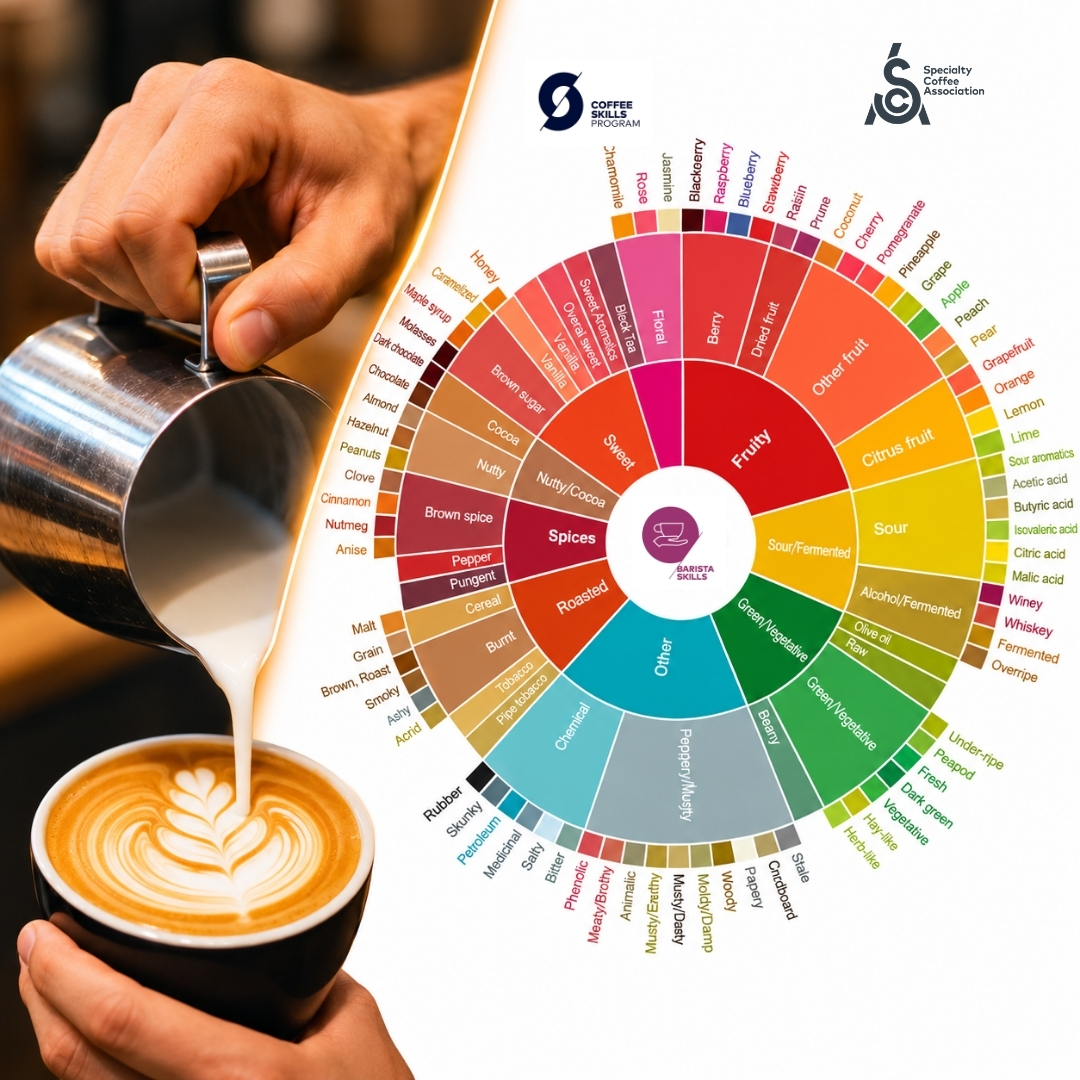
The Specialty Coffee Association (SCA) runs the Coffee Skills Program, a globally recognised education framework. It begins with an Introduction to Coffee course and offers five modules: Barista Skills, Brewing, Green Coffee, Roasting and Sensory Skills. Courses are taught by Authorized SCA Trainers (ASTs), and learners must pass written and practical exams. Successful candidates receive an SCA certificate that also counts as credit towards an SCA Skills Diploma. Because the curriculum is standardised, a certificate earned in India reflects the same outcomes as one earned elsewhere.
SCA Barista Skills Certification Levels
The Barista Skills module has three levels, totalling 42 hours:
- Foundation (7 hours): preparing basic espresso drinks correctly, proper cleaning methods and basic service.
- Intermediate (14 hours): analysing extraction variables, producing consistent milk texture and managing bar workflow.
- Professional (21 hours): leading bar quality programmes, designing custom drink recipes and refining advanced latte art.
Barista Training vs SCA Certification: Key Differences
Comparing barista training vs SCA certification, the content overlaps considerably. The differences lie in structure, assessment and recognition.
Aspect | Practical Barista Training | SCA Certification |
|---|---|---|
Training focus | Job-ready café skills and consistency | Standardised, defined learning outcomes |
Curriculum | Flexible; adapted to learner needs | Fixed syllabus by module and level |
Recognition | Proven through performance on the bar | Internationally recognised SCA certificate |
Assessment | Trainer evaluation during sessions | Formal written and practical exams |
Suitability | Beginners, café staff and owners | Career baristas and aspiring trainers |
Practical training builds confidence on the bar; SCA certification documents your skills against an international standard.
Which Course Should You Choose for Your Coffee Career?
The answer depends on where you are today and where you want to go. The two paths are not mutually exclusive. Many baristas complete practical training first, then pursue SCA certification once the fundamentals feel natural.
Choose Practical Barista Training If You…
- are new to coffee and want quick, hands-on confidence
- are training café staff before an opening
- want learning tailored to your café’s equipment
Choose SCA Certification If You…
- plan a long-term career in specialty coffee
- want a credential recognised across countries
- aim to become a trainer or work towards an SCA Skills Diploma
Barista Training and SCA Courses at Kaapi Solutions
Kaapi Solutions, headquartered in Naraina Vihar, New Delhi, offers both in-house Barista Training and SCA training programmes. Modules include an introductory coffee course, Level 1 and Level 2 barista training, latte art and coffee cupping, covering origin and processing through to advanced brewing theory. Intensive workshops typically run two to five days and take place at Kaapi Solutions’ Experience Centres or on-site at your café. The team is led by Sumit Chaudhary, an Authorized SCA Trainer and National Barista Championship gold award winner, with trainers experienced in café operations, manual brewing and sensory evaluation.
Frequently Asked Questions
1. Is SCA certification better than regular barista training?
Not necessarily. SCA certification offers a standardised, internationally recognised credential, while practical training focuses on daily café performance. Many professionals benefit from both.
2. Can beginners enroll in SCA Barista Skills courses?
Yes. The SCA lists no formal prerequisites, and Foundation suits newcomers. The SCA recommends starting with Introduction to Coffee.
3. How long does professional barista training take?
At Kaapi Solutions, intensive workshops usually run two to five days. SCA Barista Skills levels range from 7 hours at Foundation to 21 hours at Professional.
4. Is SCA certification necessary to become a barista?
No. Many baristas begin with practical training and on-the-job experience. SCA certification becomes more valuable for senior, training or international roles.
Conclusion
Choosing between barista training vs SCA certification is largely a question of timing. Build practical skills first, add SCA certification as you grow, and explore Kaapi Solutions’ barista training and SCA programmes to plan your next step.
