


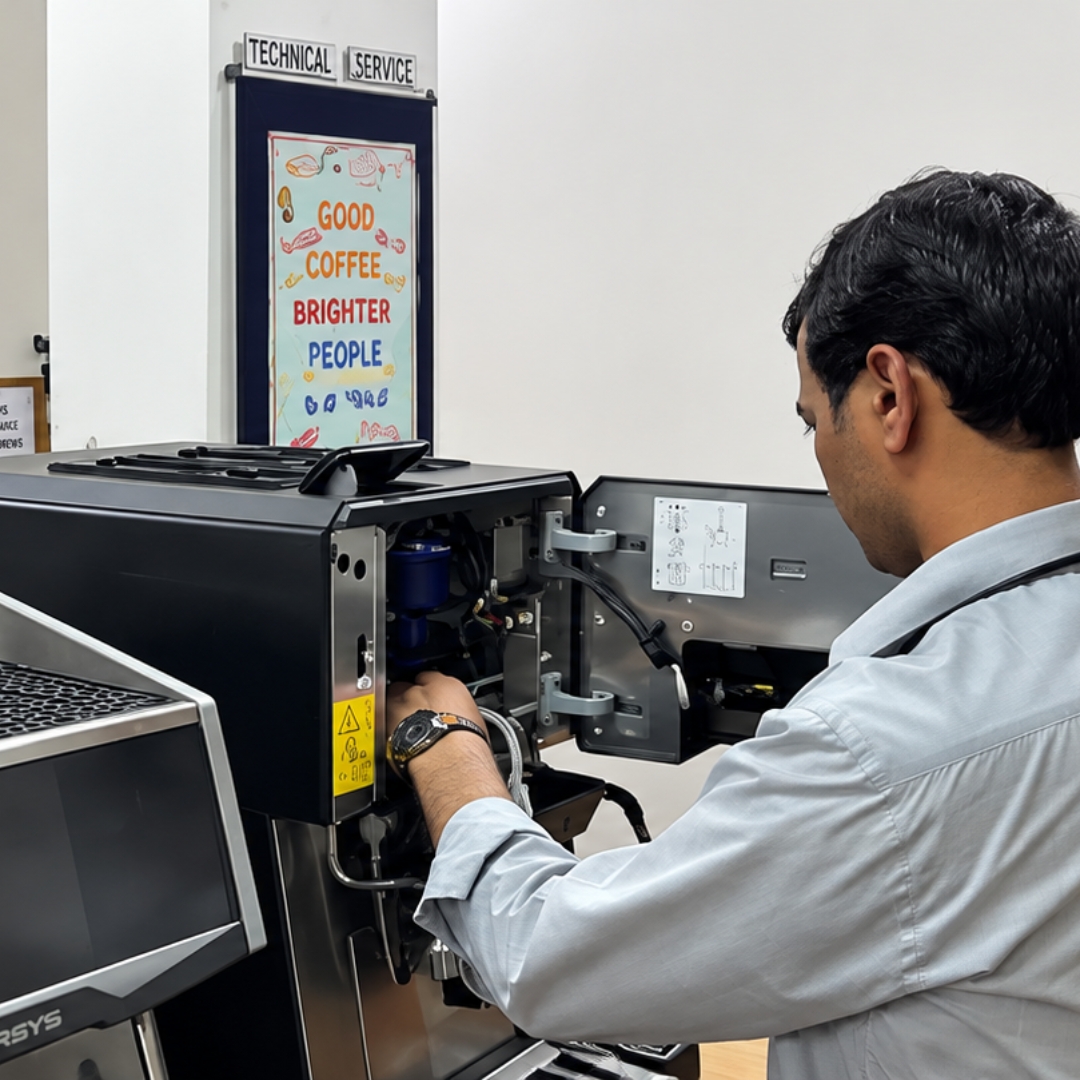
It’s 9 a.m., orders are piling up, and your espresso machine suddenly starts pulling slow, uneven shots. For a café owner, that small change can mean longer queues, frustrated baristas, and missed sales. Regular maintenance helps keep these interruptions from becoming part of the daily routine.
For a busy café, clean the machine every day and consider professional preventive servicing roughly every three months. The right interval depends on your model, number of drinks served, water quality, and manufacturer instructions. Daily cleaning and technical servicing are not the same thing—and you need both.
Why Regular Espresso Machine Servicing Matters
A commercial espresso machine works hard. Coffee oils settle around the group heads, milk can dry inside steam wand tips, and minerals in water may build up in internal passages. Left unchecked, these issues can affect flavour, steam performance, and the life of important components.
Imagine your usual cappuccino suddenly tasting different even though the beans and recipe haven’t changed. The grinder may need adjusting, but inconsistent brewing conditions or dirty components could also be involved. A sensible maintenance routine gives your team a way to spot problems early instead of guessing during the morning rush.
A Practical Espresso Machine Maintenance Schedule
When | What to do |
After every milk drink | Purge and wipe the steam wand. |
Daily | Clean portafilters, baskets, group heads and drip trays; backflush only as instructed. |
Weekly | Deep-clean approved removable parts and inspect residue. |
Monthly | Review filters, visible leaks, seals and maintenance records. |
Around every 3 months | Arrange professional performance and preventive checks where appropriate. |
Annually | Schedule a comprehensive technical inspection. |
What Should Baristas Check Every Day?
Good maintenance begins with habits that are easy to repeat. After steaming milk, wipe and purge the wand immediately. At closing, clean baskets and portafilters, remove loose coffee grounds, empty the drip tray, and follow the recommended group-head cleaning procedure. Make one person responsible for checking the closing checklist.
Once a week, inspect accessible components for residue and listen for unfamiliar sounds. Keep a short log of unusual extraction times or steam performance. These notes are surprisingly useful when a technician visits.
What Changes the Servicing Frequency?
Drink volume matters. A machine preparing hundreds of coffees each day will generally experience more wear than one used for a few dozen. Water quality matters just as much, especially where mineral-heavy water increases the risk of scale. Choose filtration based on the manufacturer’s water specifications, not simply on whether the water looks clear.
Machine age, model and staff habits also affect the schedule. A multi-group machine in a busy café may need closer attention than a lightly used single-group unit. If your team skips daily cleaning, professional visits alone won’t solve the underlying problem.
Seven Signs It Is Time to Call a Technician
- Shots become unusually fast or slow despite consistent grind and dose.
- Brewing pressure fluctuates unexpectedly.
- Water leaks appear around the group head or machine body.
- Steam output becomes weak or irregular.
- The pump or machine starts making unfamiliar noises.
- Coffee flavour changes despite consistent beans and recipes.
- Error messages repeat or brewing temperature becomes unstable.
These symptoms do not always mean the machine is faulty; grinder settings and coffee freshness can also change extraction. But internal leaks, electrical faults and boiler or pressure issues need qualified diagnosis. Do not open pressurised or electrical components yourself.
Cleaning vs Professional Servicing
Baristas can handle approved cleaning cycles, removable-part washing, visual checks and recordkeeping. A trained technician should handle internal pump or valve work, electrical checks, pressure calibration and manufacturer-approved descaling when required. Preventive maintenance is planned before a failure; emergency repair happens after service has already been disrupted.
Plan Ahead with Kaapi Solutions
For café owners, scheduling service outside peak hours is far easier than coping with a breakdown mid-shift. Keep a record of filter changes, repairs and recurring symptoms, and ask whether a structured maintenance agreement suits your equipment and usage.
Kaapi Solutions provides coffee equipment services and support, including maintenance options for commercial operations. Discuss your machine model, daily cup volume and water conditions with the team to understand what support is appropriate.
Explore Kaapi Solutions service and support
Frequently Asked Questions
How often should a busy café service its espresso machine?
Daily cleaning is essential. Professional preventive checks around every three months are a useful starting point, but always prioritise the manufacturer’s schedule and the machine’s actual workload.
Can café staff descale a commercial espresso machine?
Only if the manufacturer explicitly permits that procedure and staff are trained to follow it. Some machines require a qualified technician to avoid damage or safety risks.
Is an annual maintenance contract worthwhile?
It can help cafés plan service visits and reduce last-minute scheduling. Check what the agreement covers, including labour, spare parts, response times and exclusions.
Final Thoughts
The best time to think about espresso machine maintenance is before the next rush. Consistent cleaning, sensible water treatment and scheduled professional checks help protect coffee quality and keep your café ready for customers.
