


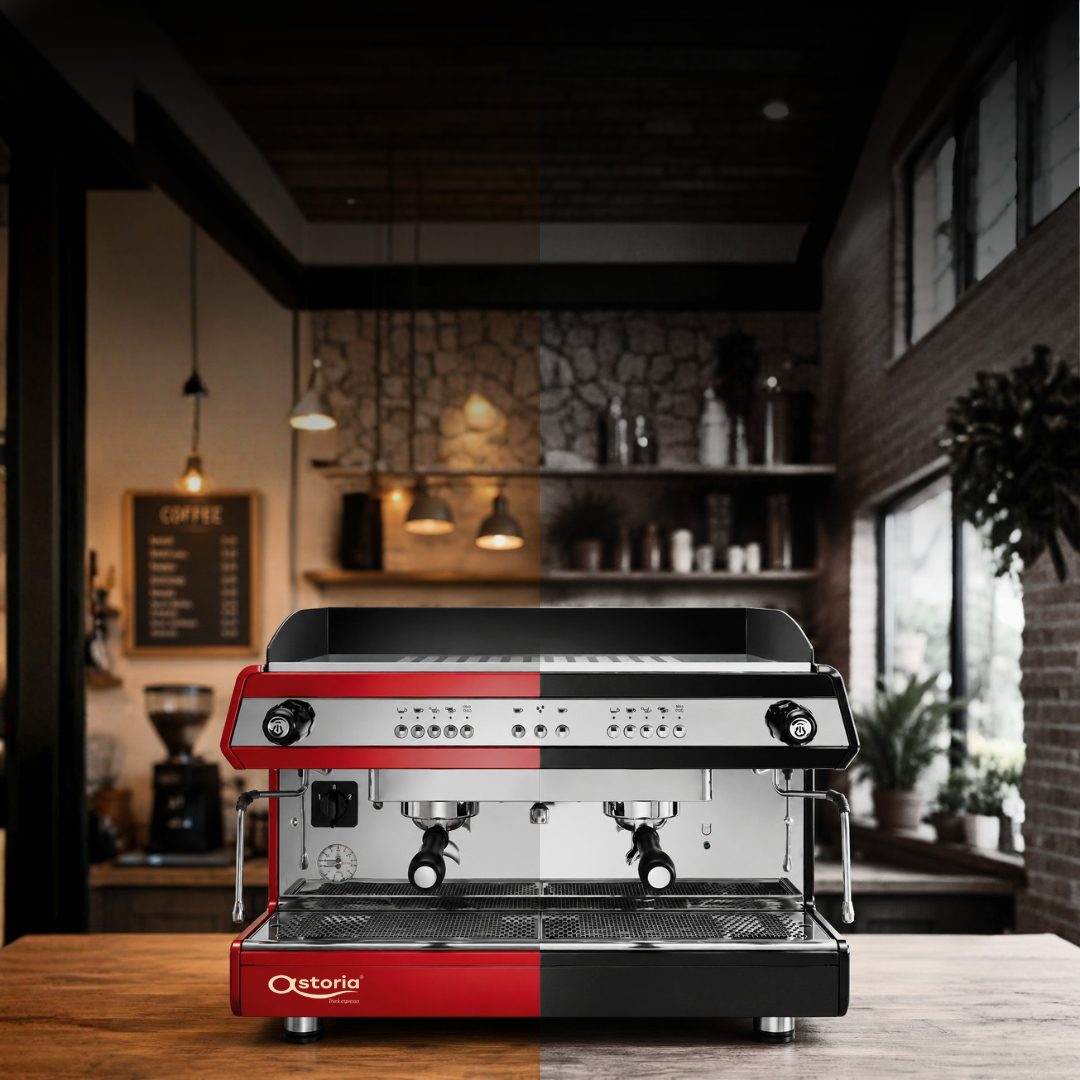
Picture this. A café owner in Gurugram spots a well-known Italian espresso machine on an online marketplace. The price is almost forty percent below what local coffee machine dealers quoted him. He convinces himself the dealers were overcharging, places the order, and the machine arrives in three weeks. For the first few months, everything works beautifully.
Then, around month six, the boiler pressure starts fluctuating. A week later, the pump gives up mid-service on a Saturday morning. He calls the seller. No response. He calls the brand’s India office. They check the serial number and tell him the machine was never officially imported, so there is no warranty and no service coverage. Local technicians will not touch it because the spare parts do not exist in India.
His machine sits dead behind the counter for eleven weeks while a replacement pump travels from Europe through customs. During that time, he serves filter coffee from a backup brewer and watches his espresso-drinking regulars quietly migrate to the café two streets away.
So here is the uncomfortable question: was that machine actually cheaper?
This guide walks you through the real difference between buying from authorised coffee machine dealers and picking up a grey import, how warranties genuinely work in India, and exactly how to verify a dealer before you transfer a single rupee.
What is an Authorised Coffee Machine Dealer?
An authorised coffee machine dealer is a company that holds an official distribution or dealership agreement with the equipment manufacturer. The brand has vetted them, trained their engineers, and appointed them to sell, install, and service its machines in a defined territory. In other words, when you buy from an authorised coffee machine distributor, the manufacturer stands behind the transaction.
That official relationship translates into things you can actually feel as a buyer:
- Genuine products. Machines come through the brand’s official import channel, with verifiable serial numbers and correct India-market specifications.
- A warranty that works in India. The warranty is registered locally and honoured by the brand’s Indian service network, not by a seller sitting in another country.
- Technical support. Factory-trained engineers who have worked on your exact model, backed by the manufacturer’s technical documentation and diagnostic tools.
- Professional installation. Correct water filtration, plumbing, drainage, and power setup — the unglamorous work that decides how long a machine lasts.
- Training. Structured barista and operator training so your team extracts consistently and does not damage the equipment through misuse.
- Genuine spare parts. Gaskets, group head components, pumps, and boards stocked in India, not ordered from abroad after something breaks.
- Preventive maintenance. Scheduled servicing that catches worn parts before they take the machine down during your busiest hour.
None of this is charity. Coffee machine dealers with manufacturer authorisation invest in inventory, engineers, and training because their business depends on machines staying alive for years. That alignment of interests is precisely what a grey seller does not have.
What is a Grey Import Coffee Machine?
A grey import (sometimes called a parallel import) is a genuine machine sold outside the manufacturer’s official distribution channel. Someone buys it overseas — at a retailer, an auction, a liquidation sale — ships it to India, and resells it here through marketplaces, social media, or word of mouth. The machine itself may be authentic. The route it took to reach you is not.
Common sources include:
- Overseas retail purchases resold in India at a markup
- Marketplace sellers listing imported stock without disclosing the sourcing
- Ex-demo or refurbished units from foreign cafés, sold as new or near-new
- Bulk parallel importers who move containers of equipment without any brand relationship
- The problems start with the physical machine and get worse from there:
- Voltage and frequency mismatch. Machines built for 110V/60Hz markets like the US or Japan will underperform or fail on India’s 230V/50Hz supply, and converters add their own failure points.
- Wrong plug and certification. Non-Indian plug configurations and missing BIS-relevant compliance are red flags at installation and during any insurance claim.
- Missing documentation. No proper import papers, no GST invoice, no warranty card — which also complicates depreciation and input credit for your business accounts.
- No manufacturer backing. The serial number is registered to another country. The brand’s Indian arm has no obligation to help you.
- No service network. Official engineers are typically instructed not to service unofficially imported units, and independent technicians rarely have the parts or training.
This is not an India-specific quirk. Most major coffee equipment manufacturers worldwide state openly that products purchased from unauthorised sellers may not be eligible for warranty coverage or service support. The policy exists because the brand cannot verify how the machine was handled, stored, shipped, or modified along the way.
Authorised Dealer vs Grey Import: The Full Comparison
Here is how the two options stack up across every factor that matters over the life of a commercial machine — not just on the day you pay for it.
| Factor | Authorised Dealer | Grey Import |
| Price | 10–25% higher upfront, transparent GST invoice | Lower sticker price, often without proper billing |
| Warranty | Valid manufacturer warranty honoured in India | Usually void the moment it lands in India |
| Installation | Professional installation with water and power setup | Self-installation or local electrician guesswork |
| Spare Parts | Genuine parts stocked locally | Sourced abroad, weeks or months of waiting |
| Repairs | Factory-trained engineers, documented service history | Independent technicians learning on your machine |
| Engineer Support | Dedicated service network, defined response times | No official support; you are on your own |
| Software Updates | Official firmware updates and diagnostics access | Locked out of updates and diagnostic tools |
| Water Calibration | Tested and calibrated for local water hardness | Factory settings for a different country’s water |
| Barista Training | Included or available as structured programmes | Not available |
| Genuine Components | Guaranteed original parts and consumables | No way to verify what is inside the machine |
| Downtime Risk | Low: preventive maintenance and fast repairs | High: every breakdown becomes a project |
| Long-term Cost | Predictable, lower total cost of ownership | Cheap to buy, expensive to keep alive |
| Resale Value | Higher: documented service history and paperwork | Low: buyers avoid machines without records |
Read the last three rows again. Downtime risk, long-term cost, and resale value are where the ‘savings’ of a grey import quietly evaporate.
Why After-Sales Service Matters More Than Purchase Price
A commercial espresso machine is not an appliance. It is a revenue-producing business asset that runs eight to fourteen hours a day, under pressure, at high temperature, in a country with hard water and voltage fluctuations. Judging it purely on purchase price is like hiring a head chef based only on salary and never checking whether they can cook.
Think through what one week of downtime actually costs a mid-sized café:
- Lost sales. A café selling 150 espresso-based cups a day at an average of ₹180 loses roughly ₹27,000 in revenue per day. A week is close to ₹1.9 lakh.
- Staff standing idle. You still pay baristas and floor staff while your core menu is unavailable.
- Refunds and goodwill damage. Pre-paid subscriptions, event bookings, and corporate orders that you now have to refund or apologise for.
- Customer migration. Coffee is a habit product. Regulars who find a new café during your two-week breakdown do not automatically return.
- Compounding delays. With grey imports, a single part can take six to twelve weeks through international shipping and customs. Your downtime is not measured in days.
Now compare that with an authorised commercial coffee machine dealer in India who picks up the phone, sends an engineer within a day or two, and fits a genuine part from local stock. The higher upfront price suddenly looks like what it really is: an insurance premium on your revenue.
7 Ways to Verify Whether Your Coffee Machine Dealer is Authorised
Anyone can put ‘authorised distributor’ on a website or a visiting card. Here is how to actually check.
1. Ask for Manufacturer Authorisation
Request a copy of the dealership or distribution certificate from the brand. Genuine authorised coffee machine distributors will share it without hesitation, because it is their core selling point. Evasive answers — ‘we source directly’, ‘we have tie-ups’ — usually mean parallel importing.
2. Verify on the Brand’s Website
Most international coffee equipment manufacturers publish a ‘Where to Buy’ or distributor locator page. Check whether the dealer’s company name appears for India. If the brand’s own website does not know them, be careful. You can also email the manufacturer’s regional office directly; they respond, because unauthorised sellers hurt them too.
3. Check Warranty Registration
Ask exactly how the warranty gets registered: in whose name, through which system, and who honours claims. An authorised dealer registers the machine’s serial number with the manufacturer for India. If the ‘warranty’ is just the seller’s personal promise on WhatsApp, it is worth exactly that.
4. Ask About Spare Parts
Ask the dealer which fast-moving parts they stock in India — group gaskets, shower screens, solenoid valves, pumps, control boards — and what the typical replacement timeline is. Dealers with genuine local inventory answer in specifics. Grey sellers talk in vague reassurances.
5. Ask Who Services the Machine
Get names, not adjectives. How many service engineers do they employ? Are they factory-trained on your specific brand? Which cities do they cover, and what is the committed response time? A real commercial coffee machine dealer in India runs a service operation, not just a sales counter.
6. Ask About the Installation Process
Proper installation includes site assessment, water testing, filtration setup, plumbing and drainage, electrical load verification, and calibration for your beans and water. If the seller’s installation plan is ‘the courier will deliver it’, you are buying a grey import, whatever the listing says.
7. Verify Training Support
Authorised dealers protect their machines by training the people who use them. Ask whether operator and barista training is included, who conducts it, and whether refresher sessions are available when your staff changes. A seller with no training offering has no long-term stake in your machine.
Quick buyer checklist — the dealer should be able to show you:
- A manufacturer authorisation certificate or listing on the brand’s website
- A GST invoice in your business name with the machine’s serial number
- India-registered warranty terms in writing
- A named service contact and committed response time
- A spare parts commitment with indicative timelines
- An installation and training plan with dates
Questions Every Buyer Should Ask Before Purchasing
Take this list to every conversation. The answers — and the confidence with which they are given — will tell you who you are dealing with.
- Is this machine officially imported for the Indian market?
- Is the warranty valid and registered in India, and for how long?
- Are spare parts stocked locally? Which ones, and where?
- Do you have factory-trained engineers for this brand?
- How quickly can a breakdown be attended in my city?
- Is professional installation included in the price?
- Do you offer preventive maintenance plans or annual service contracts?
- Are consumables — filters, cleaning agents, gaskets — easily available from you?
A dealer who answers all eight clearly is telling you something important: they expect to still be in your life three years from now.
Hidden Costs of Buying Cheap Grey Imports
The sticker price of a grey import is the only number that looks good. Everything after that works against you.
- Expensive repairs. Without warranty coverage, every fault is billed to you at full parts-plus-labour rates, often by technicians unfamiliar with the model.
- Customs complications. Parts you import yourself can get held up, misclassified, or taxed unpredictably.
- Shipping delays. A ₹4,000 valve becoming a six-week international shipment is the defining grey-import experience.
- Imported spare parts pricing. Freight, duties, and middlemen can double or triple the real cost of components.
- Long downtime. Revenue loss during repairs routinely exceeds the money saved at purchase — sometimes within a single breakdown.
- Invalid warranty. The single biggest hidden cost: you self-insure a complex machine from day one.
- Low resale value. Buyers of used commercial equipment ask for service history and import papers. Without them, offers drop sharply.
- Machine incompatibility. Voltage, water hardness, and altitude calibration issues that no one is contractually obliged to solve for you.
- Business interruption. The compounding damage of unreliable coffee service on reviews, footfall, and staff morale.
Add these up over a realistic five-to-seven-year machine life, and the grey import is very often the most expensive machine you can buy.
How Authorised Coffee Machine Dealers Protect Your Investment
Flip the picture. Buying from an authorised dealer converts a risky purchase into a managed asset:
- Genuine equipment built for Indian power and certified for the Indian market.
- Manufacturer warranty that is honoured locally, in writing, against the machine’s serial number.
- Local engineers who know your model, carry the right tools, and arrive within committed timelines.
- Genuine spare parts from Indian stock, so repairs are measured in hours and days, not shipping weeks.
- Preventive maintenance that replaces gaskets and descales boilers before failure, extending machine life significantly.
- Annual service contracts that make your maintenance cost predictable and budget-friendly.
- Better ROI and longer equipment life, because a well-maintained commercial machine can serve reliably for seven to ten years instead of limping through three.
Authorised distributors also give you something intangible but real: documented manufacturer support. When you eventually upgrade, sell, or expand to a second outlet, that paper trail — invoices, warranty registration, service records — becomes money.
Why Businesses Across India Prefer Authorised Coffee Machine Suppliers
The logic of authorised buying holds across every industry that depends on coffee, though each has its own reason:
- Café chains need identical machines, calibration, and service SLAs across multiple cities — impossible without an official dealer network.
- Hotels cannot tell a guest at breakfast that the machine is ‘waiting for a part from Italy’. Guaranteed uptime is non-negotiable.
- Restaurants run coffee as a high-margin add-on; a dead machine kills dessert-and-coffee ticket value every evening.
- Bakeries pair coffee with their core product, and a reliable machine directly lifts average order value.
- Co-working spaces advertise coffee as an amenity; member churn is far more expensive than a service contract.
- Corporate offices need high-volume machines with predictable maintenance schedules that fit facility management contracts.
- Educational institutions buy through formal procurement, which requires proper invoicing, warranty, and vendor accountability.
- Hospitals run cafeterias around the clock and cannot absorb long equipment downtime.
- Luxury residential projects install premium machines in clubhouses where the developer’s brand rides on everything working flawlessly.
In every case, the pattern is the same: the organisations that depend most heavily on coffee are the ones that refuse to gamble on grey imports.
Why Kaapi Solutions is a Trusted Coffee Machine Dealer in India
Kaapi Solutions India OPC Pvt. Ltd. is one of India’s leading coffee machine suppliers, working with cafés, hotels, restaurants, corporates, and coffee entrepreneurs across the country. The company supplies genuine imported equipment from established international brands, spanning semi-automatic espresso machines, fully automatic bean-to-cup machines, and professional coffee grinders.
What sets the company apart is the infrastructure around the machine rather than just the machine itself:
- Installation support with site assessment, water filtration, and calibration handled by trained engineers.
- Technical service and support with a dedicated helpdesk, preventive maintenance schedules, and extended service contracts.
- Genuine spare parts stocked for the brands it represents, keeping repair turnaround short.
- Professional barista training covering extraction, milk texturing, and daily equipment care.
- End-to-end café setup consultancy for entrepreneurs planning new outlets.
- Pan-India commercial support for multi-location businesses, from café chains and hotels to corporate offices and restaurants.
The company has supported names like Barista Coffee Company and Cafe Delhi Heights over multi-year relationships — the kind of track record that only an authorised, service-first dealer model can sustain.
Conclusion: You Are Not Buying a Machine. You Are Buying Uptime.
A commercial coffee machine purchase is really four purchases in one: the equipment, the reliability, the service relationship, and your long-term operating cost. Grey imports let you pay less for the first item by silently deleting the other three.
Authorised coffee machine dealers cost more upfront because they are selling all four. Over a machine’s working life, that difference almost always favours the authorised route — in downtime avoided, in repairs covered, in resale value preserved, and in the simple ability to call someone who is obliged to pick up.
Before you commit to any machine, talk to an authorised dealer, ask the eight questions in this guide, and compare total cost of ownership rather than sticker price. If you would like help choosing the right machine for your café, hotel, or office, speak to the Kaapi Solutions team for a no-obligation consultation.
Frequently Asked Questions
1. What is an authorised coffee machine dealer?
An authorised coffee machine dealer holds an official agreement with the manufacturer to sell, install, and service its machines in a territory. Purchases come with a locally valid warranty, genuine spare parts, and factory-trained engineer support.
2. How do I verify an authorised coffee machine distributor?
Ask for the manufacturer’s authorisation certificate, check the brand’s official ‘Where to Buy’ page for India, and confirm that the warranty is registered with the manufacturer against your machine’s serial number. A genuine distributor will provide all three readily.
3. Are grey import coffee machines legal in India?
Importing goods through parallel channels sits in a legally grey area and the machines themselves are not counterfeit. The practical problem is different: grey imports typically arrive without valid India warranties, correct certifications, proper invoices, or any service backing, which creates commercial and compliance risk for a business buyer. For specifics on your situation, consult a legal or import professional.
4. Will grey imports get warranty support?
Almost never. Most manufacturers state that warranty coverage applies only to products bought through authorised channels in the country of use. A grey-imported machine’s serial number is registered to another market, so Indian service centres are generally not obliged to honour claims.
5. Why are authorised coffee machine dealers more expensive?
The price difference funds official import duties and certification, local spare parts inventory, trained service engineers, installation, training, and warranty liability. You are paying for the support system, not just the hardware — and that system is what keeps your machine earning.
6. Can grey imported machines be repaired in India?
Sometimes, but slowly and expensively. Independent technicians may lack model-specific training and diagnostic tools, and parts usually have to be imported individually, which can take six to twelve weeks. Official service networks generally decline to work on unofficially imported units.
7. How long do commercial coffee machines last?
A quality commercial espresso machine, properly installed and maintained, typically serves reliably for seven to ten years or more. The same machine without water filtration, preventive maintenance, and genuine parts can start failing within two to three years.
8. Do authorised dealers provide installation?
Yes. Professional installation is a standard part of an authorised purchase and includes site assessment, water testing and filtration, plumbing, electrical verification, and calibration. Correct installation is one of the biggest factors in long-term machine health.
9. Are genuine spare parts important?
Critically. Commercial machines run at high temperature and pressure, and components like gaskets, valves, and boards are engineered to precise tolerances. Non-genuine parts fail sooner, can damage surrounding components, and typically void whatever warranty coverage remains.
10. Can I buy coffee machines online safely?
Yes — if the online seller is an authorised dealer. Buying from a dealer’s own website or verified channel gives you the same warranty and support as buying in person. The risk comes from marketplace listings where the sourcing is unclear; always verify authorisation before paying.
11. How do I choose the best commercial coffee machine dealer in India?
Look for verifiable manufacturer authorisation, an in-house service team with defined response times, local spare parts stock, installation and training included, preventive maintenance plans, and referenceable commercial clients. A dealer strong on all six will serve you well for years.
12. Why should businesses buy from authorised coffee machine suppliers?
Because a coffee machine is a revenue asset. Authorised suppliers protect that revenue with valid warranties, fast local repairs, genuine parts, and preventive care — which means lower total cost of ownership, less downtime, and better resale value than any grey import can offer.
