

A hotel breakfast buffet at eight in the morning, a restaurant clearing dessert orders at ten at night, and a cafeteria at the four o’clock shift change have one thing in common. Coffee demand arrives in a wave, and the machine either absorbs it or holds up the queue while everybody watches.That is why coffee equipment is an operational decision, not a purchase decision. Quality, speed and consistency all matter in hospitality, but in different proportions depending on who you serve. A 300-key hotel, a 60-cover restaurant and a cafeteria feeding 800 people in ninety minutes need very different machines. This guide covers what to look for in commercial coffee machines, which format suits which business, and how to judge the real cost before you sign anything.
For most cafeterias the automatic column wins on every line that matters. Semi-automatic equipment only makes sense where there is a staffed counter and coffee is being sold rather than provided.
What Should You Look for in a Commercial Coffee Machine?
Coffee Volume and Daily Capacity
Start with an honest cup count. Low-volume operations run under 100 cups a day, medium-volume sit between 100 and 300, and high-volume cross 300 and keep going. Then look at your peak hour, which is the number that actually breaks machines. A cafeteria serving 400 cups a day is not a 400-cup problem if 200 of those land in a single lunch window. Specify for the peak; the daily total will take care of itself.Speed and Brewing Performance
Two things decide throughput: brew-cycle time and recovery time. Recovery is how fast the boiler regains temperature after back-to-back drinks, and it is the quiet reason cheap machines struggle during a rush. Milk-based drinks slow everything further, so if your menu leans on cappuccinos and lattes, size the machine around milk drinks rather than black coffee.Ease of Operation
Match the machine to the people who will actually use it. A hotel breakfast attendant, a restaurant server on a double shift and a trained barista need very different interfaces. One-touch machines let anyone produce a good cup; barista-operated machines produce a better cup, but only with someone who knows what they are doing behind them.Coffee Quality and Consistency
Extraction quality, temperature stability and repeatable recipes separate professional equipment from a large domestic machine. Do not overlook the grinder either: grind consistency influences the cup more than almost any other component, and a strong machine paired with a weak grinder is wasted. Our range of commercial coffee grinders is worth reviewing alongside any espresso setup.Cleaning and Maintenance
Ask what the machine needs daily, weekly and quarterly, and be realistic about whether your team will do it. Automatic cleaning and rinse cycles help enormously in hotels and cafeterias where nobody owns the machine personally. Also check spare-parts availability and service response time in your city before you fall in love with a model.Best Coffee Machine for Hotels
What Do Hotels Need From a Coffee Machine?
Hotels are the most demanding of the three formats because a single property runs several coffee services at once. The breakfast buffet needs high-volume self-service that non-specialist staff can keep running. Room service needs speed and repeatability at odd hours. The lobby lounge needs presentation. The restaurant and banquet operation needs proper espresso-based drinks, sometimes for a hundred covers at the same time. One machine rarely covers all of it well.Recommended Coffee Machine Types for Hotels
The usual answer is a combination. Fully automatic machines handle breakfast areas, lounges and self-service points, where the operator may be a steward with two minutes of training. A commercial espresso machine belongs in the restaurant, bar or specialty outlet, where a barista can build the drinks properly. Larger properties then size up to high-capacity units for banquet and conference service. Our coffee machines for hotels are specified around exactly this mix.Key Features Hotels Should Prioritise
- High daily cup capacity with strong recovery between drinks
- A broad beverage menu, including milk-based and non-coffee options
- Fast preparation and simple, largely error-proof operation
- Automatic cleaning cycles that survive shift changes
- Reliable after-sales support, because downtime at breakfast is not recoverable
Best Coffee Machine for Restaurants
Why Restaurants Need Commercial-Grade Coffee Machines
Coffee is the last thing a guest tastes before the bill arrives, which gives it disproportionate weight in how the meal is remembered. It also arrives at the worst possible moment operationally, when several tables finish together and the kitchen is winding down. A domestic or under-specified machine cannot clear six cappuccinos in five minutes, and a slow dessert course turns tables slower.Espresso Machines for Restaurants
If you have trained staff, a commercial espresso machine gives you control over extraction and milk texture, and lets you build a proper menu of espresso, cappuccino, latte, macchiato and flat white. It also looks the part in an open service area. The trade-off is training, and retraining every time somebody leaves.Automatic Coffee Machines for Restaurants
If your service staff already juggle four jobs, an automatic machine is the safer choice. Drinks are faster, recipes stay consistent across shifts, and quality no longer depends on who happens to be on the floor. Our coffee machines for restaurants cover both routes so you can match equipment to how your dining room actually runs.Best Coffee Machine for Cafeterias
What Makes a Cafeteria Coffee Machine Different?
Cafeterias combine the highest customer volume with the shortest tolerance for waiting. People are on a break, not an outing. Service is usually self-service, the machine is operated by hundreds of untrained hands every week, and counter space is often tight. Durability and simplicity matter more here than customisation. The same logic applies to coffee machines for corporate offices, where the pantry queue at four in the afternoon tells you everything about whether the machine was specified correctly.Automatic vs Semi-Automatic Machines for Cafeterias
| Feature | Automatic | Semi-Automatic |
|---|---|---|
| Ease of use | High | Moderate |
| Staff skill needed | Lower | Higher |
| Speed | Fast and predictable | Depends on the operator |
| Customisation | Moderate | High |
| Consistency | High | Operator dependent |
| Best for | Self-service and high volume | Barista-led service |
Types of Commercial Coffee Machines for Hotels, Restaurants and Cafeterias
Fully Automatic Coffee Machines
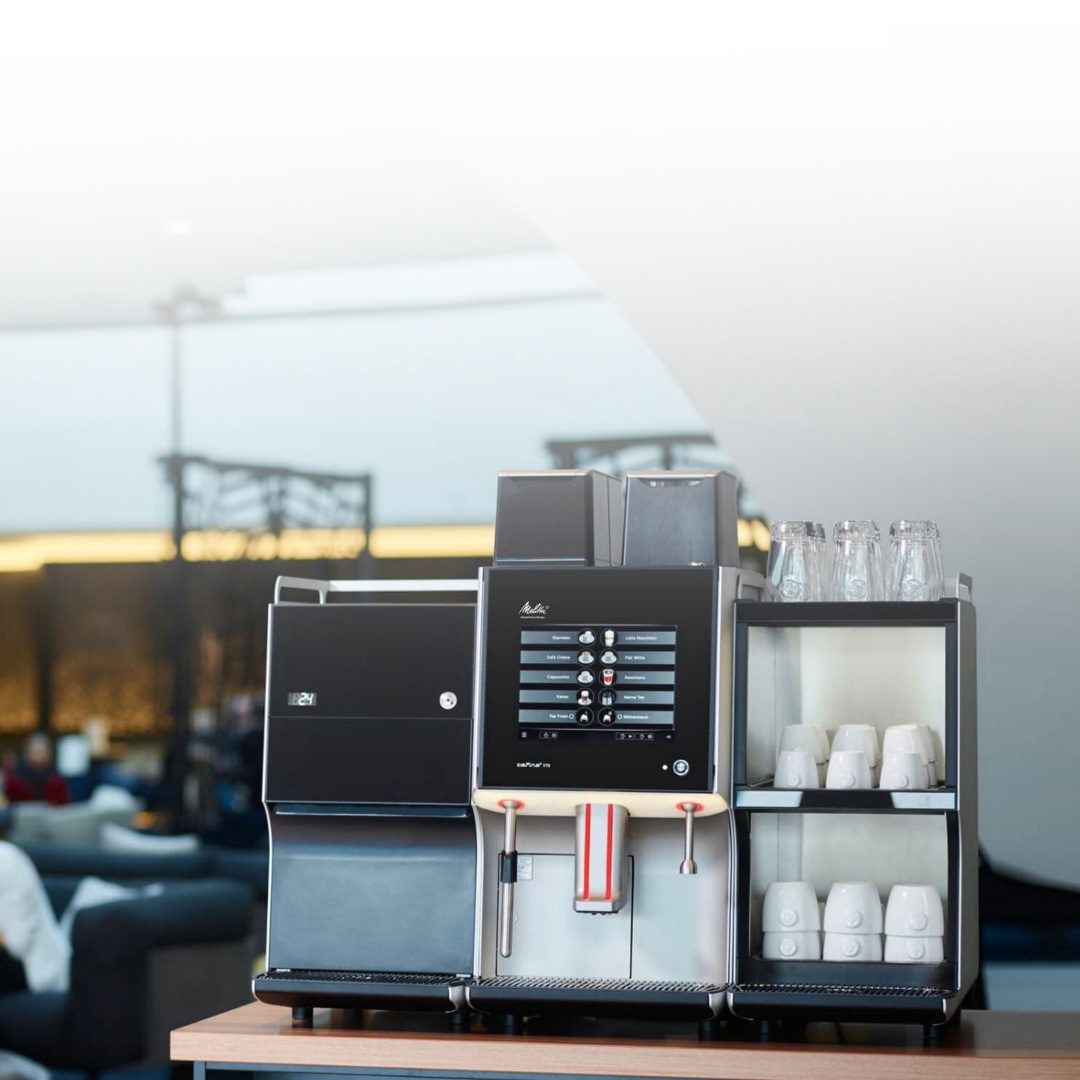
One-touch beverages, programmed recipes and high consistency regardless of operator. These are the default for self-service environments, breakfast areas and pantries. Browse the automatic coffee machines range to see the capacity options.Semi-Automatic Espresso Machines
Barista-controlled machines that allow adjustment of grind, dose and extraction, plus hand-steamed milk. Best where coffee is a menu item with a price against it. See the semi-automatic coffee machine range for one-group, two-group and multi-boiler configurations.Bean-to-Cup Coffee Machines
Whole beans are ground fresh for every cup and the machine handles dosing, brewing and, in most models, milk. Commercial bean-to-cup coffee machines suit hotels, offices and any high-convenience environment where freshness matters but a barista is not available.Specialty Coffee Machines
For premium coffee programmes where extraction is controlled tightly and the equipment is part of the brand. Relevant to hotel signature outlets and specialty cafe setups more than to general food service.Hotel vs Restaurant vs Cafeteria: Which Coffee Machine Is Best?
| Business | Recommended Machine | Main Priority |
|---|---|---|
| Hotel | Automatic plus espresso | Volume and versatility |
| Restaurant | Espresso or automatic | Quality and service speed |
| Cafeteria | Automatic or bean-to-cup | Speed and consistency |
| Hotel breakfast area | Fully automatic | Self-service |
| Fine-dining restaurant | Commercial espresso | Premium coffee |
| High-volume cafeteria | High-capacity automatic | Fast service |
How Much Does a Commercial Coffee Machine Cost?
Pricing varies widely because the machines themselves vary widely, so it is more useful to understand what moves the number:- Machine type and level of automation
- Number of groups and boiler capacity
- Rated daily cup volume and recovery performance
- Whether a separate grinder is required
- Installation, electrical load and plumbing work
- Water filtration matched to local hardness
- Maintenance contracts, spares and service coverage
- Brand, origin and warranty terms
How to Choose the Right Coffee Machine for Your Business
Answer these ten questions before shortlisting anything:- How many cups do you serve daily?
- What is your peak-hour demand, and how long does that peak last?
- Do you have trained baristas, and can you retain them?
- Which beverages dominate your menu, black or milk-based?
- Do you need self-service operation?
- How much counter space, and what power and water points are available?
- What level of automation does your team realistically need?
- What is your budget across machine, grinder, installation and service?
- How important is drink customisation to your positioning?
- What after-sales support exists in your city?
