


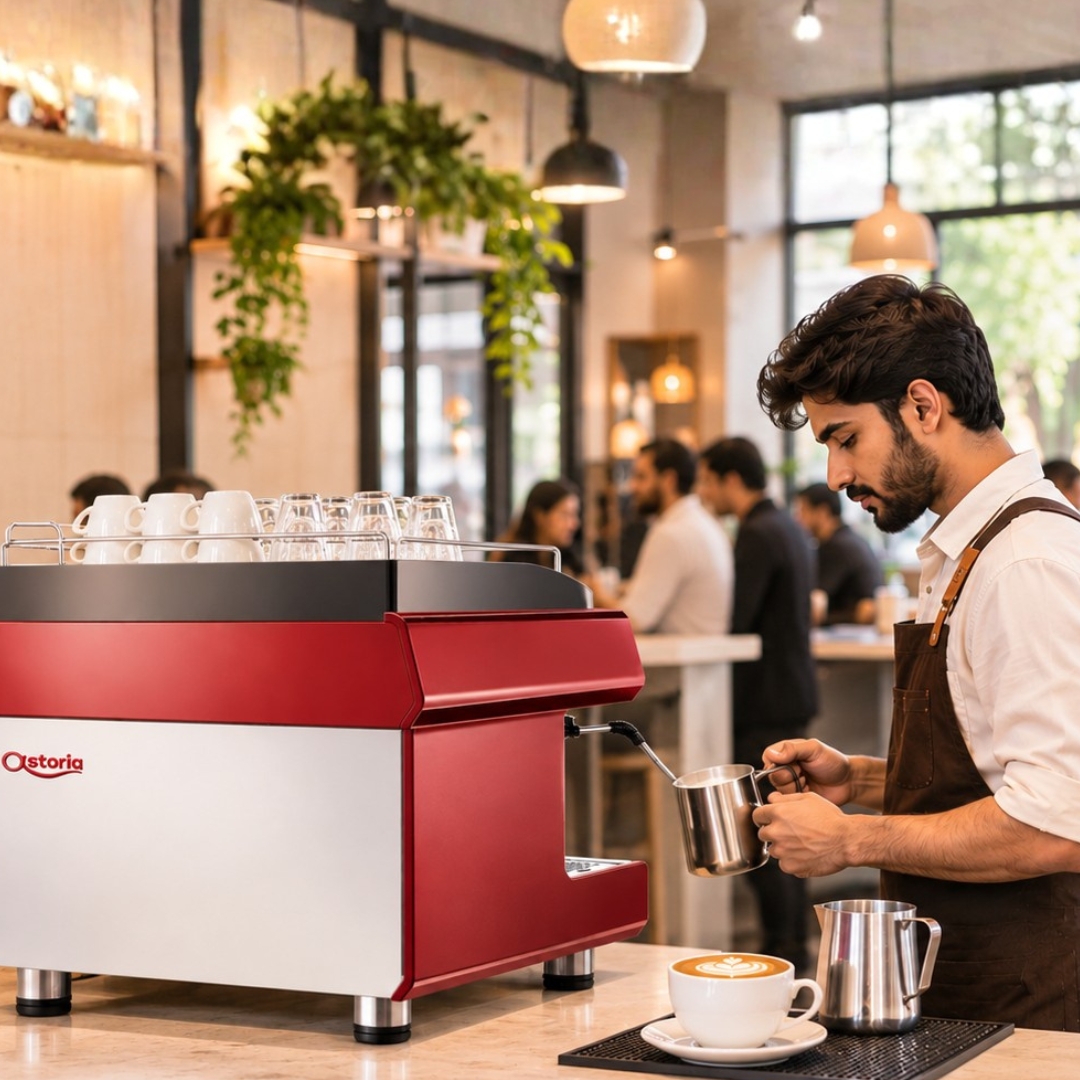
A long queue at the counter is rarely just a staffing problem. More often, baristas are losing seconds to extra steps, crossed paths and equipment placed in the wrong spot. Good coffee bar workflow design fixes this at the planning stage. This guide covers the layout decisions that shape barista movement, order preparation and the customer experience, so your bar handles rush hours with less strain.
Why Coffee Bar Workflow Design Matters
Every drink follows a sequence: order, grind, dose, extract, steam, finish and hand over. When the coffee bar layout matches that sequence, baristas move in one direction instead of doubling back.
A thoughtful coffee shop workflow also reduces collisions between team members and makes training easier, because each station has a clear purpose. It also brings consistency, so the hundredth cup tastes like the first.
6 Coffee Bar Layout Decisions That Speed Up Service
Position the Espresso Machine and Grinder Together
Place the grinder directly beside the espresso machine, ideally on the barista’s dominant-hand side. Keep the knock box within arm’s reach. Grinding, dosing, tamping and locking in the portafilter then becomes a single pivot rather than several steps.
Create Dedicated Coffee Preparation Zones
Divide the bar into clear zones: ordering, espresso and milk, finishing, and pickup. Each zone should hold only the tools it needs. A separate station for cold drinks or manual brewing keeps those orders off the espresso line.
Keep Milk, Cups, and Accessories Within Easy Reach
An under-counter refrigerator below the steam wand saves constant trips to a back fridge. Stack cups on the cup warmer or a shelf above the finishing area. Jugs, thermometers, cloths and barista accessories belong where they are used.
Separate Customer Ordering and Pickup Areas
When customers order and collect at one point, the queue and waiting guests block each other. Place pickup at the end of the workflow, away from the till.
Plan Water, Drainage, and Cleaning Access
Commercial coffee machine placement depends heavily on plumbing. Position the machine close to a water inlet, filtration and drain, with a rinse sink nearby for jugs and portafilters. Leave clearance around equipment so technicians can reach it during servicing.
Design for Peak-Hour Barista Movement
Picture your busiest hour with two or three baristas working. Barista workflow efficiency depends on each person staying in their own lane, with enough aisle width to pass safely. Avoid placing the grinder, fridge or bin where one barista must cross another.
Choosing the Right Coffee Equipment for an Efficient Layout
The right coffee bar equipment setup starts with your menu, expected volume and space. Group count, boiler capacity and grinder choice decide how many drinks the bar can prepare at once.
On compact counters, an under-counter coffee machine keeps the countertop clear for preparation and customer interaction. Kaapi Solutions supplies semi-automatic, automatic and under-counter machines, grinders and blenders, making a matched, efficient coffee bar layout easier to plan.
Common Coffee Bar Layout Mistakes to Avoid
These errors most often undo good coffee bar workflow design: placing the grinder away from the machine, keeping milk in a distant fridge and combining order and pickup points. Others include ignoring drainage until installation and buying equipment before counter dimensions are final.
Conclusion — Build a Coffee Bar That Works Smarter
Strong coffee bar workflow design comes from matching your layout to how drinks are actually made. If you are planning a new café or reworking a counter, Kaapi Solutions’ café setup consultancy can help with layout, workflow planning and equipment selection.
Frequently Asked Questions
What is the best layout for an efficient coffee bar?
For most cafés, coffee bar workflow design works best as a linear layout that follows the drink sequence: ordering, espresso and milk preparation, finishing, then pickup. It reduces backtracking and keeps queues moving.
How can café owners improve barista workflow?
Keep the grinder beside the machine, store milk and cups at the point of use, define clear stations and train staff on one consistent routine.
Where should a commercial coffee machine be placed?
Place it close to the water supply and drainage, right beside the grinder, with enough clearance for daily cleaning and servicing.
